

 Jilibet Guides
 Slots
Slots Fishing
 Live Casino
 Sports Betting
 Lottery
 Blog
Blog Promotions
What is Over/Under betting in the second half? This specialized market allows bettors to focus on scoring outcomes during the final periods of a match. Understanding how to analyze these specific lines is essential for achieving consistent results in the Philippine sports market. It provides a unique opportunity to capitalize on live game momentum. Please read Jilibet detailed guide below.
What is Over/Under Betting in the Second Half and How These Markets Work
To master “What is Over/Under betting in the second half?”, one must first understand that second-half betting is a completely independent market from the first half or the full-time result. When a bookmaker sets a line for the second half, they are only considering the points or goals scored from the start of the second half (or third quarter in basketball) until the final whistle, including any injury time or overtime depending on specific house rules.
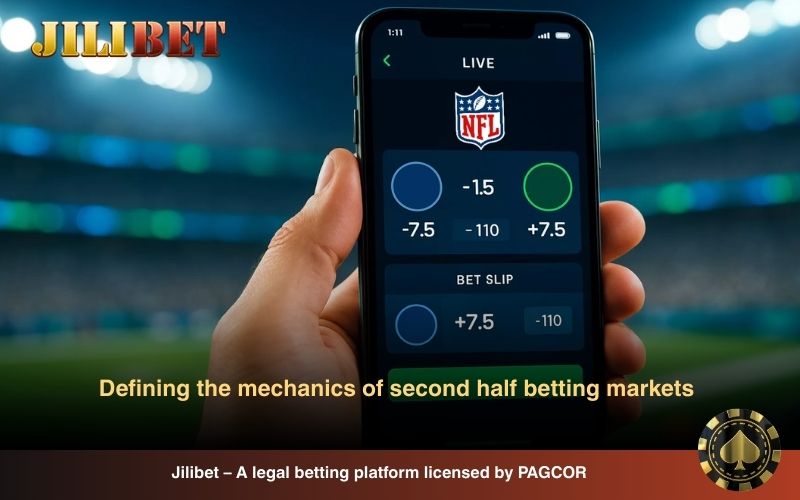
The fundamental principle revolves around a predicted “Total” set by the oddsmakers. Bettors must decide if the actual combined score of both teams during this period will be “Over” that number or “Under” it.
In the Philippines, where basketball and football are highly popular, these markets attract significant volume. For instance, in a PBA (Philippine Basketball Association) game, a second-half total might be set at 95.5 points. If the teams combine for 96 points or more in the last two quarters, the “Over” wins. If they score 95 or fewer, the “Under” prevails.
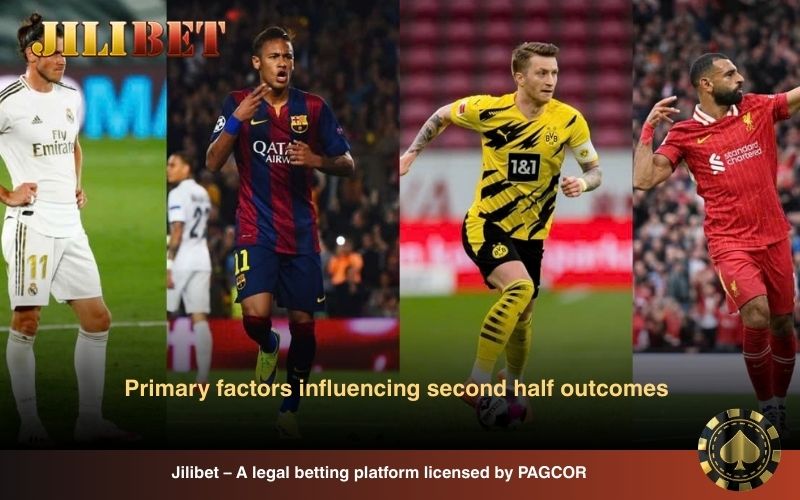
Primary factors influencing second half outcomes
Determining the likely outcome of the latter half of a game requires a multi-faceted approach. It is not merely a continuation of the first half. To successfully predict these totals, bettors must evaluate several qualitative and quantitative variables that only become apparent after the game has commenced:
Team fatigue and bench depth
Physical conditioning is a primary driver of second-half scoring patterns. In high-intensity sports, players often experience a decline in defensive intensity as the game progresses. If a team lacks a deep bench, the starters may suffer from fatigue, leading to more scoring opportunities for the opponent or a decrease in their own shooting accuracy. Conversely, teams with high-caliber substitutes can maintain a high pace, often leading to a surge in points during the fourth quarter or the final thirty minutes of a football match.
Tactical adjustments by coaches
The halftime interval serves as a strategic reset. Coaches analyze first-half failures and implement defensive or offensive shifts. In a “What is Over/Under betting in the second half?” context, understanding coaching philosophies is vital. Some coaches are known for “locking down” defensively when holding a lead, which favors the Under. Others may adopt an aggressive, full-court press if they are trailing, which typically increases the total number of possessions and, consequently, the scoring potential for both sides.
The psychology of urgency and “Garbage Time”
Psychology plays a massive role in the final periods. A team trailing by a significant margin may abandon defensive structures in a desperate attempt to score quickly, leading to an “Over” scenario. Alternatively, if both teams accept the result before the clock runs out, often referred to as “garbage time”, scoring can either spike due to relaxed defense or plummet as teams run out the clock.
Analyzing scoring variations across key sports
The following sections provide a granular look at how these sports behave after the halftime interval, offering specific scenarios that bettors should look for when evaluating What is Over/Under betting in the second half? opportunities.
Basketball
In professional basketball, the second half, and specifically the fourth quarter, is often higher scoring than the first. This is primarily due to the “penalty” or “bonus” situation. As teams accumulate fouls in an attempt to stop the clock or prevent easy layups, the game transitions into a series of free-throw opportunities. Free throws are the most efficient form of scoring in basketball.

Football
As players tire, defensive lines become disorganized and spaces open up. Statistical data shows that the period between the 75th minute and the final whistle is the most productive for scoring. When considering what is Over/Under betting in the second half?, bettors often look for “1.5” lines at halftime. If a match is 0-0 or 1-0, the likelihood of at least two goals occurring in the final 45 minutes increases as trailing teams commit more players forward, leaving themselves vulnerable to counter-attacks.
Volleyball
In the Philippines, volleyball is a major betting market. Second-half betting here usually refers to the 3rd or 4th sets. Coaches often make significant rotation changes if they lose the first two sets. Understanding the depth of a team’s bench is critical here. A team with a “super-sub” can completely change the scoring pace of a set, making the Over a strong play if the defense cannot adjust to a new offensive rhythm.
Comparative analysis of first half vs second half betting
Understanding “What is Over/Under betting in the second half?” is critical for value identification. The second half typically sees more variance due to tactical desperation and physical exhaustion. The table below illustrates the typical differences in betting dynamics between the two segments.
| Feature | First Half Betting | Second Half Betting |
| Pace of Play | Generally scripted and structured. | Highly reactive and volatile. |
| Defensive Intensity | Usually at its peak. | Often declines due to fatigue. |
| Line Accuracy | Based on historical data. | Based on live game flow and momentum. |
| Volatility | Moderate. | High (influenced by fouls/penalties). |
| Information Gap | Minimal (public data). | Significant (eye-test advantages). |
Essential strategies for mastering second half over under wagers
To achieve long-term profitability, one must look beyond simple intuition in “What is Over/Under betting in the second half?”. Successful wagering on second-half totals requires a disciplined approach to data and a keen understanding of “live” mathematics.
- Track possession efficiency: In basketball, monitor the “Pace” or number of possessions. If the first half was played at a breakneck speed but the shooting percentage was unsustainably high, the second half might see a regression to the mean, making the “Under” a viable play.
- The “3-Goal Rule” in football: In football (soccer), if a game is 0-0 at halftime, the second-half Over/Under line is often set at 1.5. Statistics show that the majority of goals in professional football are scored after the 60th minute. This makes the second-half “Over” a popular choice for late-game spectators.
- Monitor foul trouble: In the PBA or NBA, if key defensive anchors are in foul trouble heading into the second half, the paint becomes easier to attack. This almost always leads to an increase in scoring and free-throw opportunities.
- Weather and surface conditions: For outdoor sports like football, deteriorating weather or a muddy pitch can significantly slow down the second half, favoring the “Under.”
Conclusion
What is Over/Under betting in the second half? This betting style serves as a powerful tool for those who can read the flow of a game better than a pre-match algorithm. You isolate variables like fatigue and tactical shifts to find value where others see chaos. Use these professional strategies to enhance your wagering precision and profitability. Start placing your winning bets today at Jilibet.