

 Jilibet Guides
 Slots
Slots Fishing
 Live Casino
 Sports Betting
 Lottery
 Blog
Blog Promotions
How to play 6-card poker is a common question for beginners who want to understand this fast-paced casino card game before placing real bets. From choosing the best five-card hand out of six to understanding how betting works against the dealer, every detail matters. In this guide, you’ll learn the rules clearly so you can start playing 6-card poker with confidence on Jilibet below.
What Is 6-Card Poker and How Does the Game Work?
6-card poker is a casino-style table game where players compete against the dealer rather than other players, making it easier for beginners to follow. The objective is to create the strongest five-card hand from six cards, using standard poker rankings to determine the winner.
Unlike traditional poker formats, the game has a faster pace and a more structured flow, with fewer complex decisions required. Understanding how to play 6-card poker starts with recognizing how cards are dealt, how hands are formed, and how outcomes are decided in each round.
How to Play 6-Card Poker Step by Step for Beginners
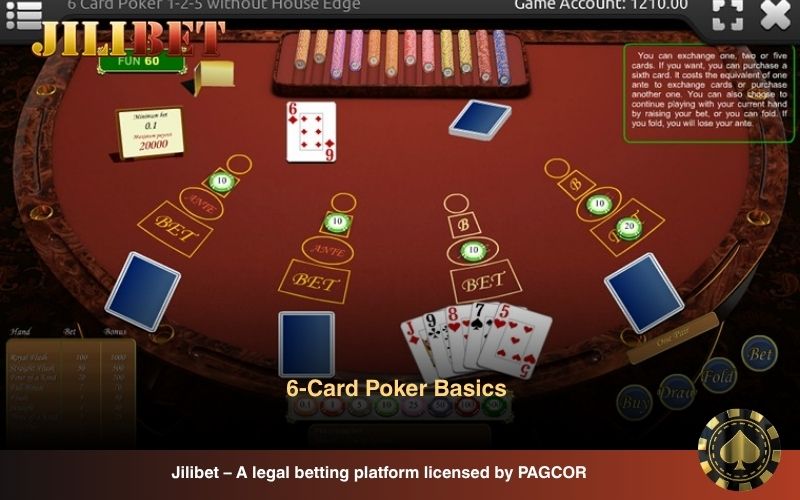
Understanding how to play 6-card poker step by step helps beginners follow the game flow without confusion, especially when facing betting decisions for the first time. Each round follows a clear structure, allowing players to quickly recognize when to act and how outcomes are determined.
By learning this sequence properly, players can avoid random decisions and focus on reading their hand effectively. This is an essential foundation for anyone who wants to play 6-card poker with confidence.
Start by placing the Ante bet
Every round begins with an Ante bet, which is required to participate in the game and receive cards. This initial wager sets the stage for the hand and determines whether the player can continue after seeing their cards.
In some versions, players may also have the option to place a bonus or side bet before the cards are dealt. Understanding these options helps beginners make better decisions from the very start.
The cards are dealt to player and dealer
After placing bets, the player receives six cards, while the dealer is dealt a combination of face-up and face-down cards depending on the table rules. The visible cards of the dealer can provide useful information for decision-making.
At this stage, players should begin evaluating their hand strength and possible combinations. Reading both your cards and the dealer’s visible cards is key when learning how to play 6-card poker effectively.
Decide whether to fold or continue
Once players review their cards, they must decide whether to fold and lose the Ante or continue the hand by placing an additional bet. This is one of the most important decisions in the game.
Making the right choice depends on understanding hand strength and the potential outcomes based on the dealer’s visible cards. Beginners should focus on making logical decisions rather than emotional ones.
The dealer reveals the remaining cards and the hands are compared
If the player continues, the dealer reveals all remaining cards and both sides form their best five-card hand from the six available cards. The hands are then compared using standard poker rankings.
The player wins if their hand is stronger than the dealer’s, while ties or weaker hands result in different outcomes depending on the table rules. This final step determines the result of each round.
Basic Rules Every Player Should Know Before Joining a 6-Card Poker Table
Before joining a real table, players should understand the core rules that define how the game is played and how results are calculated. These rules are simple but extremely important for avoiding mistakes during gameplay.
By learning these fundamentals early, beginners can follow the game more smoothly and make more confident decisions. This is a key step in mastering how to play 6-card poker in real situations.
You must build your best five-card hand from six cards
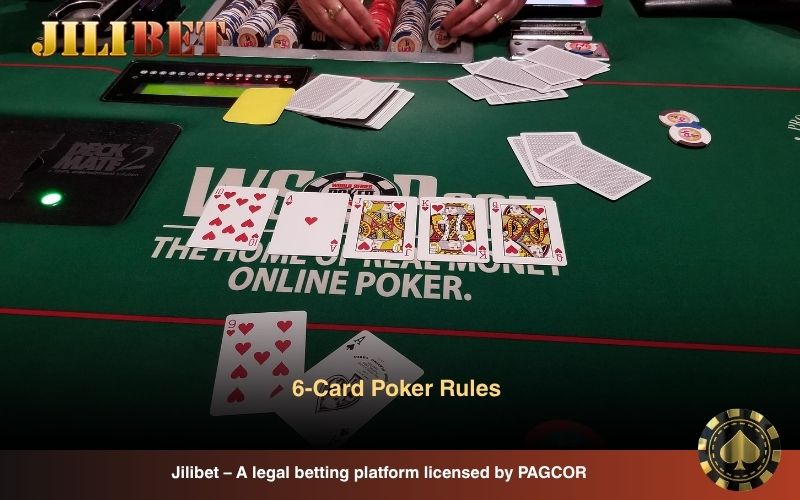
Although each player receives six cards, only the best five-card combination is used to determine the final result. This means players must carefully choose which card to exclude when forming their hand.
Understanding this rule is crucial, as selecting the wrong combination can turn a winning hand into a losing one. Practicing hand selection helps improve accuracy over time.
Standard poker rankings are used to compare hands
The game follows traditional poker hand rankings, from high card to royal flush, to determine the winner. Players do not need to learn a new ranking system, which makes the game easier to understand.
However, beginners must still be familiar with these rankings to avoid misjudging their hand strength. This knowledge is essential when deciding whether to continue or fold.
Table rules and payouts may vary by provider
Different platforms or game versions may use slightly different rules or payout structures, especially for bonus bets. Players should always review the table information before placing any wagers.
Understanding these differences helps avoid confusion and ensures that players know exactly how winnings are calculated. This is an important part of learning how to play 6-card poker responsibly.
6-Card Poker Hand Rankings Explained Clearly
Understanding hand rankings is essential when learning how to play 6-card poker, as every decision depends on how strong your final five-card combination is. Even though you receive six cards, only the best five-card hand is used to determine the result.
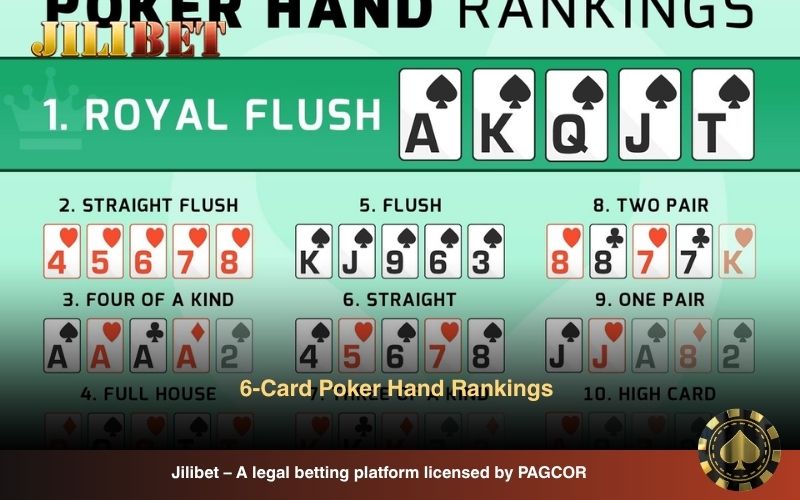
By mastering these rankings, players can evaluate their hand more accurately and avoid common mistakes when comparing results against the dealer.
|
Hand Rank |
Description | Example |
|
Royal Flush |
A, K, Q, J, 10 same suit |
A♠ K♠ Q♠ J♠ 10♠ |
|
Straight Flush |
Five consecutive cards same suit |
9♥ 8♥ 7♥ 6♥ 5♥ |
|
Four of a Kind |
Four cards of same rank |
8♣ 8♦ 8♥ 8♠ |
|
Full House |
Three of a kind + a pair |
10♠ 10♦ 10♣ + 6♥ 6♠ |
|
Flush |
Five cards same suit |
Any 5 ♦ cards |
|
Straight |
Five consecutive cards |
5-6-7-8-9 |
|
Three of a Kind |
Three cards same rank |
Q♠ Q♦ Q♥ |
|
Two Pair |
Two different pairs |
J♠ J♦ + 4♣ 4♥ |
|
One Pair |
One pair |
A♠ A♦ |
| High Card | Highest card only |
K♠ |
How to choose the best five cards from six
Since you are given six cards, you must always select the strongest possible five-card combination. This requires comparing all possible combinations and identifying which hand ranks highest.
For example, a player might have both a pair and a straight available, but choosing the straight will always give a stronger result. Practicing this skill helps improve accuracy and confidence.
Common hand-reading mistakes beginners make
Beginners often make mistakes by focusing on high-value cards instead of actual hand strength. This can lead to ignoring better combinations that are less obvious.
Another common issue is selecting the wrong five cards from six, which can completely change the outcome of a hand. Being careful with hand selection is essential for consistent results.
How Betting Works in 6-Card Poker
Betting in 6-card poker is relatively simple compared to traditional poker games, but it still requires a clear understanding of when to act and how wagers affect the outcome. Each decision influences whether you continue the hand or exit early.
By understanding the betting structure, players can avoid unnecessary risks and make more controlled decisions when learning how to play 6-card poker.
Ante bet and main decision flow
The game starts with an Ante bet, which allows the player to receive cards and participate in the round. After reviewing their cards, the player must decide whether to fold or continue with an additional wager.
This decision is critical, as it determines whether the player stays in the hand or accepts a small loss by folding early.
Bonus bets and side bets in some versions
Some versions of 6-card poker offer bonus or side bets that pay out based on the strength of the player’s hand. These bets are optional and can provide extra winnings regardless of the dealer’s hand.
However, beginners should approach these bets carefully, as they often come with different payout structures and risk levels.
Why checking the paytable matters
Payouts for both main bets and bonus bets can vary depending on the platform or game provider. Players should always review the paytable before placing bets to understand potential returns.
This helps prevent confusion and ensures that players know exactly how winnings are calculated in each situation.
Best Beginner Tips for Learning How to Play 6-Card Poker
Learning how to play 6-card poker effectively is not about applying complex strategies too early, but rather focusing on simple habits that improve consistency over time. Beginners should prioritize understanding the fundamentals before attempting advanced decision-making.
By building a strong foundation, players can avoid common mistakes and develop better judgment during each round. This approach helps create a more stable learning process and leads to more confident gameplay.
Learn hand rankings before anything else
Hand rankings are the core of every decision in 6-card poker, as they determine whether your final five-card combination is strong enough to beat the dealer. Without a clear understanding of these rankings, players are likely to misjudge situations and make incorrect choices.
Taking time to fully memorize and recognize hand strength allows players to react faster and more accurately during gameplay. This is one of the most important steps when learning how to play 6-card poker correctly.
Focus on selecting the best five-card combination
Since players receive six cards but can only use five, choosing the best possible combination is the most critical skill in this game. Even a small mistake in selecting cards can turn a winning hand into a losing one.
Beginners should practice comparing different combinations to understand which hand ranks higher in each situation. This habit improves accuracy and helps players make better decisions consistently.
Use the dealer’s visible cards as a guide
In many versions of 6-card poker, some of the dealer’s cards are revealed during the game, providing useful information that can influence your decision. Ignoring this detail means missing an opportunity to make more informed choices.
By paying attention to the dealer’s visible cards, players can better estimate potential outcomes and adjust their actions accordingly. This adds a layer of strategy that goes beyond simply evaluating your own hand.
Common Mistakes Players Make in 6-Card Poker
Although 6-card poker is relatively simple compared to other poker variants, beginners still make common mistakes that can negatively affect their results. These errors often come from rushing decisions or misunderstanding basic rules.
By identifying these mistakes early, players can correct their approach and improve faster. Avoiding these issues is a key step in mastering how to play 6-card poker effectively.

Misreading the best hand from six cards
One of the most common mistakes is failing to identify the strongest possible five-card combination from the six cards available. Players may overlook better combinations and choose a weaker hand without realizing it.
Carefully reviewing all possible options before making a decision helps prevent this issue. Developing this habit is essential for improving accuracy and overall performance.
Ignoring visible dealer information
Many beginners focus entirely on their own cards and forget to consider the dealer’s visible cards. This limits their ability to make informed decisions and can lead to unnecessary risks.
Using all available information, including what the dealer shows, helps players better evaluate the situation. This small adjustment can significantly improve decision-making.
Playing without checking the rules or payouts
Different tables may have variations in rules or payout structures, especially when it comes to bonus bets. Beginners who ignore these details often misunderstand how the game works.
Taking a moment to review the table rules and paytable before playing ensures a clearer understanding of the game. This reduces confusion and leads to a smoother overall experience.
Responsible Ways to Practice 6-Card Poker Before Playing for Real
Before playing with real money, beginners should take time to understand the game and build confidence through practice. Learning how to play 6-card poker in a controlled environment helps reduce unnecessary risks and allows players to make better decisions over time.
By combining knowledge of the rules with responsible habits, players can enjoy the game more sustainably. This approach not only protects your bankroll but also helps you develop stronger decision-making skills.
Start with rules and hand comparisons first
Before placing real bets, players should focus on understanding how hands are formed and compared in 6-card poker. This includes recognizing the best five-card combination and knowing how rankings determine the outcome.
Practicing these fundamentals ensures that decisions are based on logic rather than guesswork. It also helps reduce mistakes when transitioning to real-money gameplay.
Set a budget before joining the table
Managing your bankroll is essential, especially for beginners who are still learning the game. Setting a clear spending limit helps prevent emotional decisions and keeps gameplay under control.
By sticking to a budget, players can focus on improving their skills without worrying about unnecessary losses. This creates a more stable and enjoyable experience.
Use trusted platforms with clear game information
Choosing a reliable platform ensures that rules, payouts, and gameplay mechanics are transparent and easy to understand. This is particularly important for players who are still learning how to play 6-card poker.
A trustworthy environment allows players to focus on improving their skills rather than dealing with confusion about rules or payouts.
Why Learn How to Play 6-Card Poker on Jilibet?
Starting your journey on a well-structured platform can make learning much easier, especially for beginners who are not yet familiar with the game flow. A clear interface and accessible gameplay help players focus on understanding the rules without unnecessary distractions.
Jilibet provides an environment where players can gradually build their skills while enjoying a smooth and user-friendly experience. This makes it easier to apply what you’ve learned about how to play 6-card poker in real gameplay situations.

A simpler way for beginners to explore the game
For new players, simplicity is key when learning a card game with multiple decisions and outcomes. A clean layout and easy-to-follow structure help reduce confusion and improve understanding.
This allows players to focus on learning the game rather than struggling with complex interfaces or unclear rules.
Better understanding leads to better decisions
The more clearly you understand how the game works, the more confident and consistent your decisions will become. Instead of relying on guesswork, players can make choices based on logic and observation.
This shift from random play to structured thinking is essential for long-term improvement in 6-card poker.
FAQs About How to Play 6-Card Poker
When learning how to play 6-card poker, beginners often have similar questions about rules, gameplay, and decision-making. Below are clear answers to help you understand the game more confidently.
How many cards do you get in 6-card poker?
Players receive six cards in each round, but only the best five-card combination is used to determine the final result.
Do you use all six cards in the final hand?
No, players must select the strongest five-card hand from the six cards available when comparing with the dealer.
Is 6-card poker played against the dealer or other players?
6-card poker is typically played against the dealer rather than other players, making it easier for beginners to follow.
Are bonus bets available in every version of the game?
Not all versions include bonus bets, and payout structures can vary depending on the platform or game provider.
What is the most common mistake beginners make?
The most common mistake when learning how to play 6-card poker is choosing the wrong five-card combination, which can lead to losing even when holding a strong hand.
Final Thoughts on How to Play 6-Card Poker
Understanding how to play 6-card poker is the key to turning a simple card game into a structured and enjoyable experience. By learning how to select the best five-card hand, understanding betting decisions, and avoiding common mistakes, players can improve their results over time. When combined with responsible gameplay and a reliable platform like Jilibet, the game becomes easier to learn and more rewarding in the long run.