

 Jilibet Guides
 Slots
Slots Fishing
 Live Casino
 Sports Betting
 Lottery
 Blog
Blog Promotions
How to play poker is one of the most common questions for new players who want to understand this strategic card game before placing real bets. From learning hand rankings to knowing how each betting round works, every step plays a role in your decisions at the table. In this guide, you’ll discover the fundamentals clearly so you can start playing poker with confidence on Jilibet below.
What Is Poker and Why Is It So Popular?
Poker is a card game that combines strategy, psychology, and probability, making it more than just a game of luck. Players compete against each other rather than the house, using their cards and betting decisions to win chips over time.
One of the main reasons poker remains popular is its depth and flexibility. Whether you are playing casually or aiming to improve your skills, understanding how to play poker begins with knowing how the game works and how players win each hand.
How to Play Poker Step by Step for Beginners
Understanding how to play poker step by step helps beginners follow the game without feeling overwhelmed by rules or betting actions. Each round follows a clear structure, and once you understand the sequence, the game becomes much easier to manage.
By learning how each stage works, players can make better decisions instead of reacting randomly. This is the foundation of learning how to play poker effectively in real situations.

Each player receives cards and the hand begins
At the start of a Texas Hold’em game, each player is dealt two private cards known as hole cards. These cards are only visible to the player and form the basis of their strategy for the rest of the hand.
From this point, players begin evaluating their cards and deciding whether to continue based on their strength. This early decision is critical in shaping how the hand will unfold.
Betting rounds decide how the hand develops
Poker hands progress through several betting rounds: pre-flop, flop, turn, and river. After each stage, players can check, call, raise, or fold depending on their strategy and confidence.
These betting rounds are where most decisions are made, and understanding them is key to mastering how to play poker in a structured way.
Showdown determines the final winner
If two or more players remain after the final betting round, the game reaches a showdown where all remaining players reveal their cards. The strongest hand wins the pot.
This is where understanding hand rankings becomes essential, as even a small difference in card strength can determine the outcome.
Poker Hand Rankings Every New Player Must Know
Knowing hand rankings is one of the most important parts of learning how to play poker, as every decision depends on how strong your cards are compared to others. Without this knowledge, players cannot accurately judge when to bet or fold.
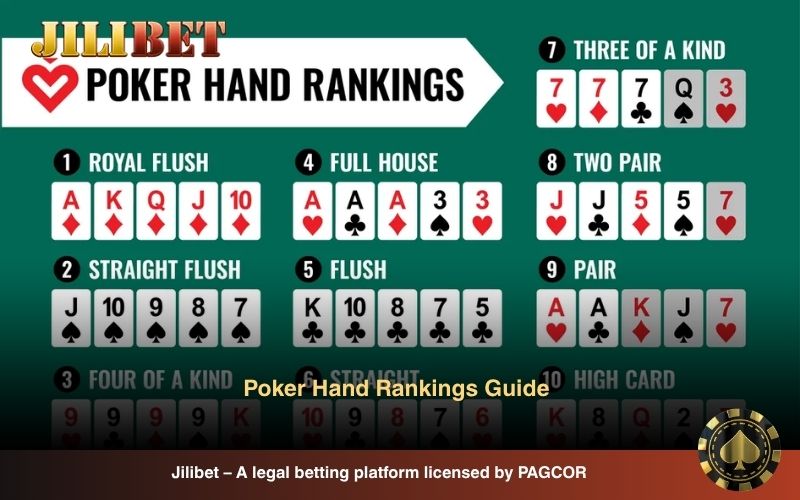
Understanding these rankings allows players to read the table more effectively and avoid costly mistakes during gameplay.
|
Hand Rank |
Description |
Example |
|
Royal Flush |
A, K, Q, J, 10 same suit |
A♠ K♠ Q♠ J♠ 10♠ |
|
Straight Flush |
Five consecutive cards same suit |
9♥ 8♥ 7♥ 6♥ 5♥ |
|
Four of a Kind |
Four cards of same rank |
8♣ 8♦ 8♥ 8♠ |
|
Full House |
Three of a kind + a pair |
10♠ 10♦ 10♣ + 6♥ 6♠ |
|
Flush |
Five cards same suit |
Any 5 ♣ cards |
|
Straight |
Five consecutive cards |
5-6-7-8-9 |
|
Three of a Kind |
Three cards same rank |
Q♠ Q♦ Q♥ |
|
Two Pair |
Two different pairs |
J♠ J♦ + 4♣ 4♥ |
|
One Pair |
One pair |
A♠ A♦ |
|
High Card |
Highest card only |
K♠ |
Basic Poker Terms You Need to Understand
Before diving deeper into gameplay, beginners must understand common poker terms used during every round. These terms define actions and decisions that directly impact the outcome of a hand.
Learning these keywords will make it much easier to follow the game flow and understand how to play poker without confusion.

Check, call, bet, raise, and fold
These are the core actions in poker. Checking means passing the action without betting, calling matches an existing bet, raising increases the bet, and folding means giving up your hand.
Understanding when to use each action is essential for controlling your gameplay and avoiding unnecessary losses.
What all-in means in real gameplay
Going all-in means betting all your remaining chips in a single move. This is often used when a player is confident in their hand or wants to pressure opponents.
It is a high-risk, high-reward decision that beginners should approach carefully until they fully understand the game.
What the pot represents in poker
The pot is the total amount of chips or money that players are competing to win in a hand. Every bet made by players contributes to the pot.
Winning the pot is the ultimate goal, and understanding its value helps players decide whether a bet is worth making.
How a Standard Texas Hold’em Hand Works
Texas Hold’em is the most popular poker variation and is often the first format beginners learn. Understanding how a full hand plays out helps connect all the rules into one clear sequence.
By following each stage step by step, players can see how decisions build on one another throughout the game.

Pre-flop action starts after the hole cards are dealt
Once players receive their two cards, the first betting round begins. Players decide whether to fold, call, or raise based on their starting hand.
This stage sets the tone for the rest of the hand and often determines how aggressive or cautious a player will be.
The flop, turn, and river explained simply
The flop reveals three community cards, followed by the turn and river, which add one card each. These shared cards are used by all players to form their best five-card hand.
Each new card can change the strength of a hand dramatically, making every stage important.
When and how players reveal their cards
At showdown, remaining players reveal their cards to determine the winner. The player with the best five-card combination takes the pot.
Knowing when to reveal and how to compare hands is a key part of understanding how to play poker correctly.
Essential Rules New Poker Players Should Never Ignore
While poker is easy to learn at a basic level, there are several important rules that beginners must understand to avoid costly mistakes. These rules go beyond simple gameplay and directly affect how decisions are interpreted at the table.
By learning and applying these rules early, players can follow the game more smoothly, reduce confusion, and improve their overall experience when learning how to play poker in real situations.

Clear betting actions matter
In poker, every action must be clearly communicated, whether it is a check, call, raise, or fold. Unclear gestures, hesitation, or ambiguous chip movements can lead to misunderstandings and may even result in unintended actions being enforced.
For beginners, it is important to act confidently and deliberately when making a move. Clear decisions not only prevent disputes but also help maintain a fair and smooth game flow.
Acting out of turn can create problems
Poker follows a strict order of play, and acting out of turn can disrupt the entire table. If a player makes a move before it is their turn, it can influence other players and lead to confusion or unfair advantages.
To avoid this, beginners should always stay aware of the action sequence and wait for their turn before making any decision. This habit ensures proper gameplay and helps build discipline at the table.
Not every all-in reopens the betting
Many new players assume that any all-in automatically allows others to raise again, but this is not always the case. If the all-in amount is smaller than a full raise, it may not reopen the betting round for players who have already acted.
Understanding this rule is important because it affects how players respond to all-in situations. Knowing when you can or cannot raise helps prevent mistakes and allows for more accurate decision-making.
Best Beginner Tips for Learning How to Play Poker
Learning how to play poker effectively requires more than just understanding the rules, as beginners also need to develop good habits from the start. Instead of focusing on complex strategies, players should prioritize simple and practical approaches that improve consistency over time.
By applying the right fundamentals early, players can avoid common mistakes and build a stronger foundation. This makes the learning process smoother and helps them gain confidence in real gameplay situations.
Start with hand rankings and table flow first
Before trying advanced tactics, beginners should focus on understanding hand rankings and how a poker round progresses from start to finish. Knowing which hands are strong and how each betting round works allows players to make decisions based on logic rather than guesswork.
A solid grasp of these fundamentals helps players read situations more clearly and reduces the chances of making unnecessary mistakes during a hand.
Play tighter with stronger starting hands
One of the most effective ways for beginners to improve is by playing fewer hands but choosing stronger starting combinations. Entering too many pots with weak cards often leads to difficult decisions and unnecessary losses.
By being more selective, players can maintain better control over their gameplay and increase their chances of winning when they do commit to a hand.
Learn position before trying advanced moves
Position plays a major role in poker because it determines how much information a player has before acting. Players who act later in a round can observe others’ actions and make more informed decisions.
Understanding position helps beginners avoid risky plays and improves their overall strategy, making it an essential concept when learning how to play poker.
Common Beginner Mistakes When Learning How to Play Poker
When learning how to play poker, beginners often focus too much on winning individual hands instead of building a consistent strategy. This leads to repeated mistakes that can quickly drain their chips and reduce confidence at the table.
By understanding these common errors early, players can adjust their approach and develop better habits. Avoiding these mistakes is one of the fastest ways to improve overall performance in poker.
Playing too many weak hands
One of the biggest mistakes beginners make is entering too many pots with weak or unplayable hands. This often happens because new players are curious or do not yet understand which hands are worth playing.
Over time, this habit leads to unnecessary losses and difficult situations where strong decisions are hard to make. Learning to be selective with starting hands is a key step in improving poker skills.
Ignoring the strength of the board
Many beginners focus only on their own cards and forget to consider the community cards on the table. This can result in overestimating their hand strength and missing potential threats from opponents.
Understanding how the board interacts with possible hand combinations allows players to make more accurate decisions and avoid costly mistakes.
Misunderstanding when to fold
New players often struggle with folding, especially after they have already invested chips into the pot. This emotional attachment can lead to chasing losses and continuing with weak hands.
Knowing when to fold is just as important as knowing when to bet, and making disciplined decisions helps preserve your bankroll over time.
Responsible Ways to Practice Poker Before Playing for Real
Before playing poker with real money, beginners should take time to understand the game and build confidence through practice. Learning how to play poker in a controlled way helps reduce unnecessary risks and improves long-term results.
By combining knowledge of the rules with responsible habits, players can enjoy the game more sustainably. This approach not only protects your bankroll but also allows you to develop better decision-making over time.

Learn the rules before risking real money
Many beginners rush into real-money games without fully understanding how poker works, which often leads to quick losses. Taking time to learn hand rankings, betting rounds, and basic rules provides a much stronger foundation.
Practicing with free games or low-stakes tables is a smart way to gain experience without unnecessary pressure. This helps players build confidence before moving to higher levels.
Set limits and control your bankroll
Managing your bankroll is one of the most important aspects of poker, especially for beginners. Setting clear limits on how much you are willing to spend helps prevent emotional decisions and keeps gameplay under control.
By sticking to a budget, players can focus on making better strategic decisions instead of worrying about losses.
Choose trusted platforms with clear game information
Playing on reliable platforms ensures that rules, payouts, and game structures are transparent and easy to understand. This is particularly important for beginners who are still learning how to play poker.
A trusted platform also provides a smoother experience, allowing players to focus on improving their skills rather than dealing with confusion or uncertainty.
Why Start Learning Poker on Jilibet?
Starting your poker journey on a well-structured platform can make a big difference in how quickly you learn and improve. With clear game layouts and accessible tables, beginners can focus on understanding the rules without feeling overwhelmed.
Jilibet provides an environment where players can gradually build their skills while enjoying a smooth and user-friendly experience. This makes it an ideal place to apply what you’ve learned about how to play poker in real gameplay situations.

A simpler way for beginners to explore poker
For new players, simplicity is key when learning a complex game like poker. A clean interface and clear game flow help reduce confusion and make it easier to follow each stage of a hand.
This allows players to focus on learning rather than struggling with the platform itself.
Better understanding leads to better decisions
The more you understand how poker works, the more confident and consistent your decisions become. Instead of guessing, players can rely on logic and probability when choosing actions.
This shift from random play to structured thinking is what separates beginners from improving players over time.
FAQs About How to Play Poker
Learning how to play poker often comes with many common questions, especially for beginners trying to understand the basics. Below are clear answers to help you get started more confidently.
What is the easiest poker game for beginners to learn?
Texas Hold’em is widely considered the easiest poker variant for beginners because of its simple rules and clear structure.
How do you win in poker without showing your cards?
You can win by betting in a way that makes all other players fold, allowing you to take the pot without a showdown.
What are the poker hand rankings from highest to lowest?
Poker hands range from Royal Flush as the strongest down to High Card as the weakest, with several rankings in between.
How many cards do you get in Texas Hold’em?
Each player receives two private cards, and five community cards are placed on the table for everyone to use.
Is poker more about luck or skill?
Poker involves both luck and skill, but over time, skilled players consistently perform better through strategy and decision-making.
Final Thoughts on How to Play Poker
Understanding how to play poker is the first step toward turning a complex card game into a structured and enjoyable experience. By learning hand rankings, following the flow of each round, and applying basic rules consistently, players can make smarter decisions at the table. When combined with responsible gameplay and the right platform like Jilibet, poker becomes not only easier to learn but also more rewarding over time.